Bathroom choices
Do Master Bathrooms Need a Tub? The Code, the Listing and the Buyer
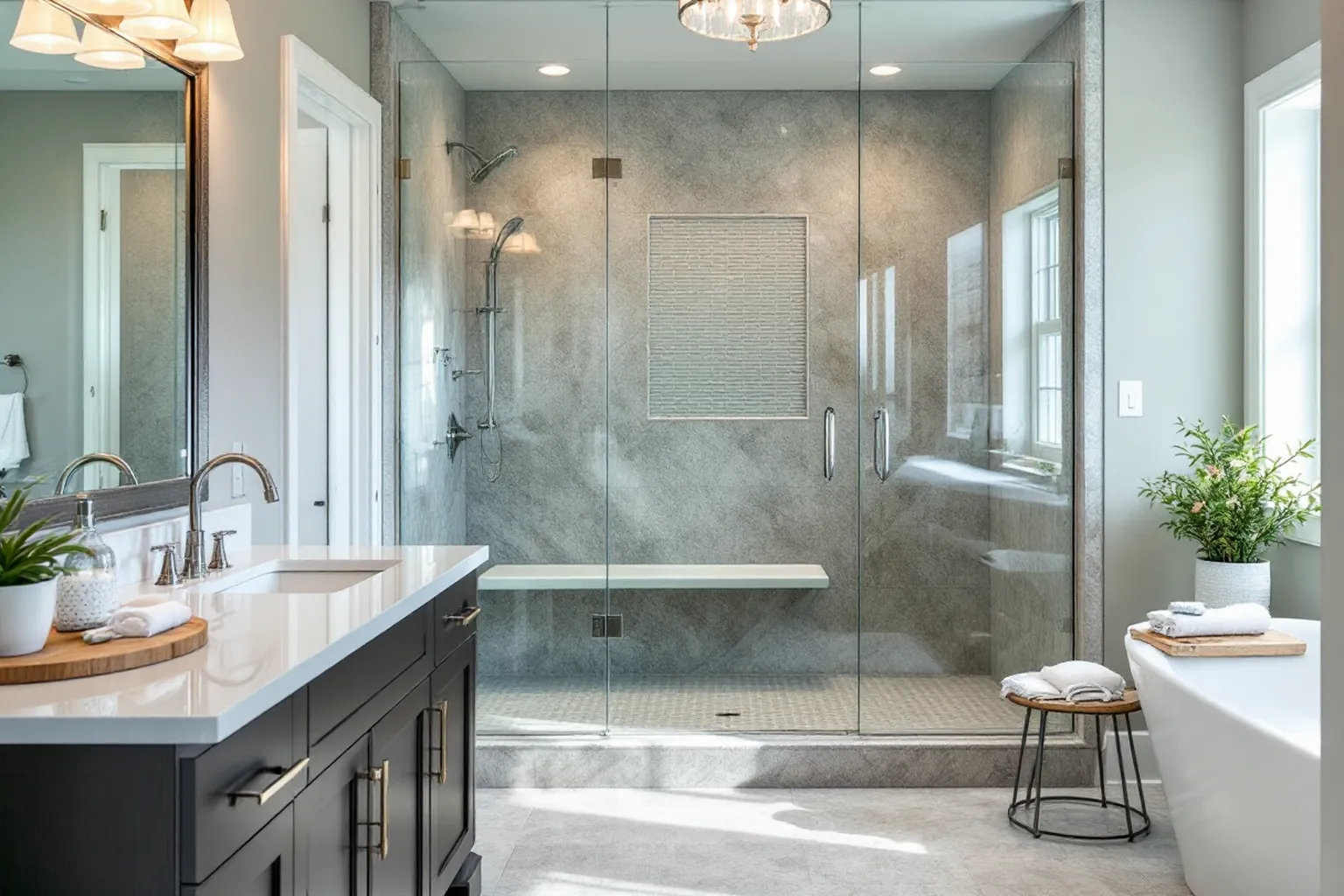
Do master bathrooms need a tub? Not by any rule: the 2021 International Residential Code asks each home for “a bathtub or shower” (section R306.1, as reproduced by Jaspector), and a shower-only primary bath passes. The real test is the buyer. In NAHB’s What Home Buyers Really Want survey, 27 percent of first-time and repeat buyers said they would not want a primary bath with only a shower stall (NAHB Eye on Housing), and in the 2024 edition a shower plus tub was still the top-rated primary bath feature at 78 percent (NAHB Eye on Housing). So the master can lose the tub; the house usually should keep one somewhere.
No code, census or appraisal rule asks for a tub in the master
Every official definition we could open treats a tub and a shower as interchangeable. The model residential code text reads: “Each dwelling unit shall be provided with a water closet, lavatory, bathtub or shower, and kitchen area with a sink” (IRC 2021 R306.1, as reproduced by Jaspector; the ICC’s own viewer blocks automated readers, so check the copy your town adopted). The code also says nothing about which bathroom holds the fixture. One shower anywhere in the house satisfies it.
The Census Bureau uses the same either-or test to decide whether a home has working plumbing at all: “Complete plumbing facilities are defined as hot and cold piped water, a bathtub or shower, and a flush toilet” (U.S. Census Bureau). By that measure, only 1 percent of homes lacked complete plumbing by 1990, and a tubless house is not one of them.
Where the tub starts to matter is the listing sheet, which is a marketing label, not a legal one. That is the part of this question none of the ranking pages explain, so the next table lays it out.
How each rulebook labels a shower-only master bath
We compiled what each standard actually says about a room with a toilet, a sink and a shower but no tub. Read across: the only places a missing tub costs you anything are the listing count and the buyer’s head.
| Rulebook | What it asks for | Shower-only master is |
|---|---|---|
| Model code, IRC 2021 R306.1 (Jaspector copy) | Bathtub or shower per dwelling | Compliant |
| Census plumbing test (Census) | Bathtub or shower | Complete plumbing |
| RESO Data Dictionary 2.0, BathroomsFull (RESO) | Toilet, sink, bathtub, shower head | Not a full bath on its own |
| RESO 2.0, BathroomsThreeQuarter (RESO) | Three of the four elements | A three-quarter bath |
| REcolorado MLS input guide (REcolorado) | Sink, toilet, bathtub, shower (may be combined) | A 3/4 bath |
| NAHB buyer survey, 2021 (NAHB) | Shower stall plus tub | Rejected by 27% of buyers |
Sources: Jaspector (IRC 2021 R306.1 text); U.S. Census Bureau; RESO Data Dictionary 2.0; REcolorado; NAHB Eye on Housing. Compiled by Kitchen and Bath Renovators, accessed 2026-11-24.
The tub decides whether your master is listed as a full bath
The RESO Data Dictionary, the field standard most MLS systems map to, defines a full bath as “a room containing all four of the four elements constituting a bath: toilet, sink, bathtub, shower head (in tub or stall)” (RESO). Its three-quarter field says “a typical three-quarters bath will contain a sink, toilet and shower” (RESO). Take the tub out and, on paper, the master drops from 1 full bath to 1 three-quarter bath.
In practice the hit is smaller than it sounds, for two reasons RESO itself spells out:
- If an MLS does not use the three-quarter field, the full-bath field “may represent the sum of all full and three-quarters bathrooms” (RESO), so many listings will still show the room as a full bath.
- RESO admits local habits differ: some markets call a sink, toilet and tub without a shower a full bath, others a three-quarter bath (RESO). Ask your agent how your MLS fills the field before you assume the worst.
Where the MLS is strict, as in Denver’s REcolorado guide (full bath = sink, toilet, bathtub, shower; three of four = 3/4 bath), a 3-bedroom, 2-bath house with a shower-only master shows up as 1 full and 1 three-quarter. That changes how it sorts in a “2+ full baths” search, which is a visibility cost, not a code problem. If the hall bath keeps its tub, the house still has one full bath, and that is the line most buyers with small children check.
About one buyer in four would walk away from a shower-only primary bath
NAHB’s survey asks buyers to rate features as essential, desirable, indifferent or “do not want”. For the primary bath in the 2021 edition, NAHB Eye on Housing reported:
- 72 percent of first-time buyers and 72 percent of repeat buyers rated both a shower stall and a tub essential or desirable (NAHB).
- 27 percent of both groups said they “Do Not Want” a primary bath with only a shower stall, which NAHB reads as unlikely to buy a home without a tub (NAHB).
- Among first-time buyers, 30 percent called the shower-plus-tub pairing essential and 42 percent desirable (NAR).
- Across all buyers, 36 percent called a tub essential and the pairing ranked first of 18 bath features (NAR).
By the 2024 edition, which surveyed more than 3,000 recent and prospective buyers, both a shower and tub in the primary bath was still the top bathroom feature at 78 percent, ahead of a linen closet at 76 percent and a private toilet compartment at 70 percent (NAHB Eye on Housing). We could not find a published 2024 “do not want” figure for shower-only, so the 27 percent is the latest number for that question.
Splitting buyers into deal-breakers, would-likes and don't-cares
The two NAHB questions measure different things, but together they show how soft most of the tub preference is. Our calculation, using the 2021 primary-bath numbers from NAHB: deal-breaker share = 27 percent (“do not want” shower-only); soft preference = 72 minus 27 = 45 points (want both, but did not say they would reject shower-only); no strong preference = 100 minus 72 = 28 percent. Treat the middle band as approximate, since the questions were asked separately.
| Buyer group | Share (2021) | What it means for your remodel |
|---|---|---|
| Deal-breaker: rejects shower-only | 27% | Skips your listing or discounts the offer |
| Soft preference: likes a tub, will bend | About 45 points | Won by a great shower plus a tub elsewhere |
| No strong preference | About 28% | Unaffected |
Source: our calculation from NAHB Eye on Housing, What Home Buyers Really Want 2021 edition (first-time and repeat buyers both 72% and 27%).
What a 60-inch tub footprint can become instead
The features buyers ranked right behind the tub tell you what to trade it for. In the 2024 survey a linen closet (76 percent) and a private toilet compartment (70 percent) were the next two primary-bath features (NAHB Eye on Housing). Realistic swaps for a standard alcove tub:
- A larger walk-in shower with a bench and a fixed and handheld head. See what that costs on our walk-in shower cost page; a curbless entry is compared in curbless shower vs wet room.
- A linen closet or tall cabinet, the second-ranked feature in NAHB‘s 2024 list.
- A second vanity, if the wall is long enough; our double vs single vanity guide has the clearances.
- A freestanding soaker in place of a built-in tub, if you want the bath but less bulk. Most need more room than a 60-inch alcove, as our freestanding tub in an alcove test showed.
Tub removal itself is usually the cheaper part. HomeAdvisor puts a tub-to-shower conversion at $1,500 to $8,000 with about $3,000 typical, while This Old House gives $2,000 to $12,000. The full line-by-line breakdown is on our tub to shower conversion cost page.
Four checks before you rip out the master tub
- Step 1
Count the tubs left in the house
If the master tub is the only one, keep it or plan a tub in another bath. This is the one check that moves you into the deal-breaker group in the table above.
- Step 2
Ask how your MLS counts a shower-only bath
Under RESO it is a three-quarter bath, but some MLS systems fold that into the full-bath number. Your agent can pull the field from a recent listing.
- Step 3
Check who actually bathes
Small children, a soaking habit or a doctor’s advice to soak are real reasons to keep a tub. A tub nobody has filled in a year is floor space.
- Step 4
Price both layouts on the same plan
Keeping a tub and a separate shower usually means a bigger room and two sets of valves. Run both options through our remodel cost calculator and the master bathroom remodel cost guide before choosing.
Frequently Asked Questions
Is it normal for a master bathroom to not have a tub?
Should I put a tub in my master bathroom?
Put one in if it would be the only tub in the house, if you soak, or if you sell to families soon. Skip it if another bath has a tub and the space buys a better shower, storage or a toilet room, the features ranked next in NAHB‘s 2024 survey.
Why are people getting rid of bathtubs?
Mostly space and use: a built-in tub that rarely gets filled takes a 60-inch wall that could hold a bigger walk-in shower, and stepping over a tub wall gets harder with age. Our bathroom accident statistics page covers the injury side. Buyers have not followed fully: both a shower and tub was still the top primary-bath feature at 78 percent in NAHB‘s 2024 survey.
What can go in a master bathroom instead of a tub?
A larger walk-in or curbless shower, a linen closet, a second vanity, or a private toilet compartment. Buyers rated a linen closet at 76 percent and a toilet compartment at 70 percent essential or desirable (NAHB).
Does removing the tub turn a full bath into a three-quarter bath?
Under the RESO Data Dictionary, yes: a sink, toilet and shower is a typical three-quarter bath. Some MLS systems that skip the three-quarter field count it as full (RESO). See also half bath vs full bath.
Sources
- NAHB Eye on Housing, In the Bath, First-Time Buyers Really Want Both a Shower & Tub (Paul Emrath) (2022-03-30)
- NAHB Eye on Housing, Home Buyers Are Looking for Amenity Loaded Kitchens and Bathrooms (Eric Lynch) (2024-09-10)
- National Association of REALTORS, Does the Primary Bathroom Still Need a Tub? (2021-06-22)
- National Association of REALTORS, Survey: First-Time Buyers Still Want a Bathtub (2022-04-15)
- RESO, Data Dictionary 2.0: BathroomsFull (DD 2.0)
- RESO, Data Dictionary 2.0: BathroomsThreeQuarter (DD 2.0)
- REcolorado, Listing Input Guide: Bathroom Types (2022, updated 2023-11-07)
- U.S. Census Bureau, Historical Census of Housing Tables: Plumbing (n.d.)
- Jaspector, IRC 2021 R306: Required dwelling plumbing fixtures (n.d.)
- HomeAdvisor (Angi Inc.), How Much Does Tub to Shower Conversion Cost? (Updated 2026-06-17)
- This Old House, Tub-to-Shower Conversion Cost (2026 Guide) (Updated 2026-03-04)